

Regression Hypnotherapy – How It Works, What it Does for You, and More
Some of my clients report that they have tried other therapies, invested months of work, better understood their issues, and acquired valuable skills. The reason why they come to me, though, is that they still feel just the same inside.
Regression hypnotherapy helps my clients overcome emotional problems by processing past negative experiences in a safe environment so that they can start feeling well.
It is an effective treatment for anxiety, depression, phobias, trauma, and more. Find out what it does and how it works!
What Is Regression Hypnosis?
The purpose of regression therapy is to find out how past events in your life affect your current life. Hypnotic regression therapy uses hypnosis to link the current issues with the events in your past.
Those past events are linked to the root cause of the long-lasting issues you experience today. So, the purpose of regression therapy is to understand the root cause of current issues.
Though the events happened long ago, the beliefs formed back then direct, drive, and sometimes limit your life, causing various issues.
Rational vs. Unconscious Understanding
You might have a sound rational guess on how certain events in your past contributed to who you are now as a person. Nevertheless, hypnotic regression helps you go deeper and remember how those events affected you emotionally in the past.
Rational memories, or those you remember rationally, are limited to specific facts and lack completeness. But this does not mean that the information got lost with time. Your unconscious keeps much fuller and more detailed information about your past.
The purpose of accessing those memories is to remember how you felt about events in your past, what you understood about them, and what beliefs you formed back then under their influence.
What ages are treated in regression hypnotherapy?
Events that influence your beliefs about yourself and your life are typically formed before age 8 or 10. Events and environments in very early childhood can be impactful. Beliefs formed in the early years are confirmed and grow stronger in the following years.
Traumatic events that happened in your adulthood can also play an important role and be treated in age regression therapy.
The Benefits of Regression Hypnotherapy
Neuroscience shows that your consciousness has a predictive function. That means that it does not simply analyze everything on your path. Your consciousness creates a limited, highly selective personal perception of your life.
Your consciousness perceives what it expects to perceive. Those expectations align with the past experiences and beliefs you formed about yourself and your life.
Therefore, when regression hypnotherapists use hypnosis to overcome negative emotions about past experiences, this can change your current thinking, emotions, and behaviors.
This therapy has been used successfully with clients who suffer from post-traumatic stress disorder (PTSD), anxiety, panic attacks, phobias, depression, excess weight, and other issues.
How Does Regression Hypnotherapy Work?
Regression hypnotherapy uses hypnosis to help people recall traumatic events and then work through them.
Regression Therapy Techniques
At the beginning of the session, the therapist guides you into a hypnotic state where you can recall the event and release any fear or pain about it.
Uncovering past events that influence you today and releasing the emotions associated with them are just the first steps in regression therapy.
After such so-called discovery work, you can gain awareness about the unconscious beliefs that limit you and cause issues.
Those beliefs formed early in your childhood were naturally influenced by full dependence on your parents or other caregivers, limited understanding, and a lack of ability to change the situation you were exposed to.
The situation you are in now as an adult is entirely different from that. You have a much better understanding of what was happening back then. You are independent and able to influence situations in your life.
Regression hypnotherapy helps you correct and upgrade your beliefs in agreement with your current abilities as an adult.
The new empowering beliefs will effortlessly create a new way of perceiving your life, thinking, feeling, and taking action.
After a successful regression, the therapist will guide you back to the present day.

Regression Therapy History
In the earlier days, hypnotherapy didn’t have any reasonable explanation, and therefore, it was rejected and replaced at the end of the 19th and beginning of the 20th century by psychoanalysis.
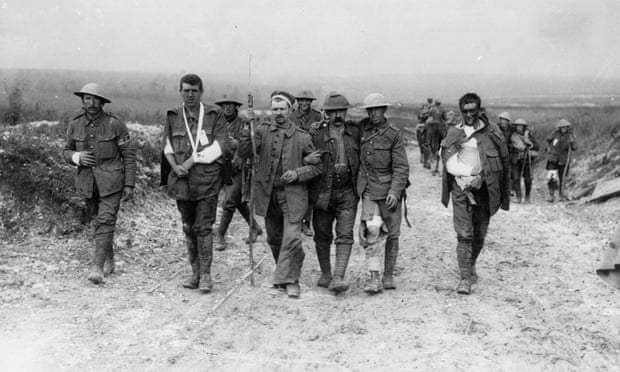
However, hypnotherapy and regression therapy were especially effective during World Wars I and II. Back then, popular, long-lasting psychoanalysis wasn’t able to meet the needs of traumatized soldiers and officers.
Hypnotherapists used regression therapy with great success to bring back vivid memories of the traumatic war scenes. While reviewing the war scenes under hypnosis, the soldiers were able to experience suppressed emotions in a safe environment, release them, and free themselves from PTSD (Posttraumatic Stress Disorder).
Modern regression hypnotherapy
A key figure in formalising regression hypnotherapy as a clinical method was Gil Boyne, who developed Transforming Therapy and trained thousands of practitioners worldwide. His work established age regression as a structured, repeatable approach for identifying and resolving the root causes of emotional difficulties — and remains foundational to how regression is practised today.
In my own practice, regression hypnotherapy is part of an integrative approach that also draws on neo-Ericksonian hypnosis, NLP and other neuroscience-based techniques. Each of these modalities reaches the unconscious mind in a slightly different way, and combining them allows me to tailor the session to what each client actually needs, rather than following a fixed script.
If you would like to experience regression hypnotherapy to release old emotions that are holding you back in your current life, book a free discovery call with me.
Is Regression Therapy Dangerous?
Experiencing strong negative emotions during a session is sometimes listed as a risk of regression hypnotherapy. The example of World War veterans illustrates the opposite dynamic: dissociation from intense emotions caused lasting trauma, while re-association under hypnosis offered a fast and lasting resolution. Working with a hypnotherapist who is experienced in regression is important precisely for this reason.
However, regression hypnotherapy is safe and noninvasive. In fact, it’s so safe that people feel relaxed most of the time during the session.
Another often-discussed drawback of regression is the possibility of false memories. In the first place, there are no true memories. All memories are limited to your personal perception of any event in your life. If the memory is related to your childhood, it will be further distorted by limited childhood understanding. This is what causes issues in adulthood.
Moreover, recalling past events in adulthood may overlay them with additional interpretations and thus distort them further.
This is the task of the hypnotherapist to guide you to free yourself from the burden of the old memories and their influence on you. In doing this, a skilled hypnotherapist takes special care not to introduce any further memory falsification on his part by suggesting or interpreting information.
So, it is crucial to choose a hypnotherapist who is certified, experienced, and trained in regression therapy. It is helpful if the therapist already has experience treating the issues you need help with.
Does Regression Therapy Work?
Regression hypnotherapy has a substantial evidence base. The underlying mechanism is well supported by neuroscience: because human consciousness functions as a projection of past experiences into the present, updating the emotional meaning of a past memory changes how the nervous system responds in daily life. This is why clients often report that shifts feel effortless after a successful session — the belief driving the behaviour has changed at the source.
In practice, many clients come to me after years of talk therapy that gave them clear insight into their patterns but left the emotional experience unchanged. Regression hypnotherapy addresses that layer directly. Across clients working on issues such as excess weight, anxiety, and self-worth, the pattern I observe consistently is that resolving the specific childhood experience behind the belief creates changes that reasoning alone could not.
I cannot recommend Olga enough for anything that you’re ready to move through in life.
When I came to her I thought I was going for one issue but we discovered the real issue was around safety and holding onto excess body weight that I could never seem to release no matter what I did.
After working with her, in just one session, I was able to release 10 pounds in a month and my habits, confidence and general way of feeling towards myself and my body did a complete 360.
To say my life is completely changed is an understatement. I don’t even know who I was before my session with Olga. 10/10 recommend you hire her ASAP. I am already looking forward to working with her for our second session.
Ashley, TUF Woman Table, USA
Find more client reviews by following the link here.
FAQ Regression Hypnotherapy
How many regression therapy sessions should I go to?
One to three sessions of deep regression work should be sufficient to address the root causes of one specific issue.
The same root causes can cause several issues. So you might experience improvements with other issues as well.
Having said that, you might want to acquire skills to upgrade your thinking and behavior and keep improving your life. For this purpose, other types of hypnotherapy, as well as CBT and NLP, will be of great help.
How much does regression hypnotherapy cost?
Watch my video about the therapy costs here.
Can one undergo regression hypnotherapy online?
Yes, regression hypnotherapy is effective when done online. You can experience all its benefits safely from the comfort of your home.
Is regression therapy scientific?
Regression hypnotherapy has been known for a long time, and nowadays, there is a sound scientific explanation for its efficiency. Human consciousness functions as a projection of past experiences into the present. This happens without any conscious efforts from your side, i.e., unconsciously.
Therefore, correcting the understanding of the past under hypnosis completely changes your current life experiences and allows you to live a better, more joyful, and more fulfilling life.
What is past life regression?
Past life regression is practiced by those who believe that experiences in past lives affect you in the present. It is not widely recognized by hypnotherapists because it cannot be proven.
Conclusions
Regression hypnotherapy helps overcome emotional problems by processing past experiences in a safe environment.
Regression hypnotherapy helps you upgrade limiting beliefs and empowers you.
Regression therapy can be effective in treating anxiety, depression, PTSD, insomnia, raising self-esteem, and more.
About the Author

Olga Willemsen, Ph.D. > Certified Clinical Hypnotherapist & Transformational Coach
Olga Willemsen is the founder of New Empowered You, where she helps clients work through anxiety, burnout, and stubborn weight struggles using an evidence-based, pragmatic approach. She holds a Ph.D. in Natural Sciences and brings that same grounded mindset to her work in advanced hypnotherapy.
A certified member of the International Association of Counselors and Therapists (IACT), Olga trained in RTT, Neo-Ericksonian Hypnosis, and the Simpson Protocol. Her approach works with the mind’s patterns rather than against them, helping clients shift the habits and beliefs that keep them stuck.
Curious what’s really behind what’s holding you back? Let’s find out together.
References
- Budson, Andrew E.; Richman, Kenneth A.; Kensinger, Elizabeth A. Consciousness as a Memory System. Cognitive and Behavioral Neurology: October 3, 2022 – Volume – Issue – 10.1097/WNN.0000000000000319/ doi: 10.1097/WNN.0000000000000319
- Barrett, L. F. (2017). How emotions are made: The secret life of the brain. Houghton Mifflin Harcourt.
- Smith, G. Elliot., Pear, T. H. (1918). Shell shock and its lessons. 2d ed. Manchester: University press.
- Brown, W. (1923) Clinical: William Brown. Psychopathology and Dissociation. British Medical Journal, Vol. I, 1920, p. 139 et seq.. International Journal of Psychoanalysis 4:335
- Boyne, Gil, Transforming Therapy a New Approach to Hypnotherapy (August 1989) ISBN 978-0930298135


2 Comments