
Mental Health Diagnosis Overlap: What Genetics and Lived Experience Reveal
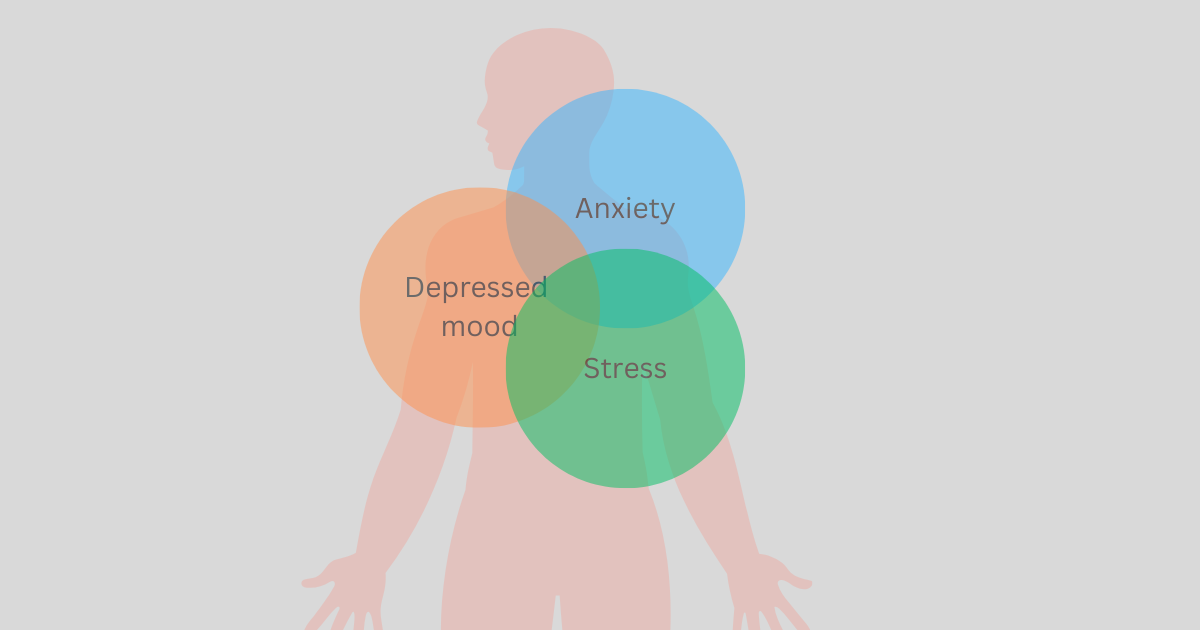
Many people don’t live within a single diagnosis. An anxious person often has periods of low mood and apathy. A person who tends toward depression frequently becomes anxious when life demands more than they can handle. Symptoms can coexist, switch places, and change over time.
This is why “What do I have?” is often less helpful than “What pattern is running my mind and nervous system?”
An extensive new genetics study supports this clinical reality. It suggests that many psychiatric diagnoses share genetic risk factors and can be grouped into a few broad clusters. At the same time, the same study shows immense complexity: hundreds of genomic regions contribute tiny effects, and many regions overlap across diagnoses, while others differentiate them.
In this article, I’ll connect three layers: the symptom overlap we see in real people, the genetic overlap researchers measure, and the limits of what genetics can explain about a human mind. Then I’ll explain why transdiagnostic work focused on emotional regulation and trauma patterns is often the most practical path forward.
Key Takeaways
- Mental health symptoms often overlap and shift over time, especially between anxiety, depressed mood, and stress.
- A major genetics study supports this reality: many diagnoses share genetic risk, and disorders cluster into broad groups.
- The same study also shows massive complexity: hundreds of genetic regions contribute only minor effects, with both overlap and differentiation across disorders.
- This strengthens a practical conclusion: transdiagnostic models (focusing on shared mechanisms rather than labels) often fit reality better than rigid categories.
- Genetics can inform research, but lasting change still depends on mechanisms we can work with now, including emotional regulation, behavioral patterns, and trauma-processing.
Why anxiety and depression often overlap in real life
The symptoms don’t respect diagnostic borders. In practice, I rarely meet someone who fits neatly into one label.
An anxious person may have regular waves of fear, tension, and “what if” thinking. But in between those waves, many also drop into sadness, apathy, and a heavy, depressed mood. Someone who tends toward depression often becomes anxious easily, especially when life demands more than they can handle.
What I often see underneath both is the same core issue: emotional (dis)regulation. The mind swings between high-arousal distress (fear, agitation, panic) and low-arousal distress (numbness, heaviness, withdrawal). There are also moments of relief and even genuine positive moods. That fluctuation is not a sign that someone is “fine” or “broken.” It’s a sign that their inner system is trying to cope with stress using the (imperfect) tools it has.
In real life, many people do not live inside one box. Symptoms shift. The pattern stays.
This is why I focus less on the diagnosis and more on the pattern. When we work directly with the pattern, people often become calmer, more resilient, and more stable across all these moods, regardless of the label they were given.
What the genetics study adds (and what it doesn’t)
Researchers analyzed data on common genetic variants across 14 psychiatric disorders (over 1 million cases). They found pervasive genetic overlap across disorders, and that this overlap can be summarized by five underlying “genomic factors.” Nature
These five factors roughly map onto:
- Compulsive features (e.g., OCD, Tourette’s, anorexia nervosa)
- Schizophrenia–bipolar spectrum
- Neurodevelopmental conditions (e.g., autism, ADHD)
- Internalizing conditions (e.g., depression, anxiety, PTSD)
- Substance use disorders (Nature)
A key point: for some groups, especially the internalizing cluster and the schizophrenia–bipolar cluster, the authors report high polygenic overlap and relatively few disorder-specific signals. Nature
This does not mean “all disorders are the same.” It means shared biology can nudge risk, while development and coping shape how that risk looks in a person’s life.
Why “five clusters” is a summary, not an explanation
At first glance, grouping mental disorders into five genomic factors looks like a straightforward biological explanation. But this neat structure sits on top of a far more complex genetic reality.
When researchers look more closely, they don’t find a small set of “mental health genes.” They identify hundreds of genomic regions, called loci, that are involved in different ways. In this study alone, researchers found 238 loci associated with shared vulnerability across disorders, and another 412 loci that help distinguish one group of disorders from another.
A locus is not a single gene. It is a region of the genome that may contain genes, regulatory elements, or switches that influence how genes are expressed. Each of these regions contributes only a very small effect, and none of them acts in isolation.
So while the five-factor model is a valuable overview, it does not mean mental health problems can be reduced to five biological causes. It means that risk is spread across many interacting genetic influences, which are then shaped further by development, lifestyle, different types of stress, and other factors.
We are not looking at “the depression gene” or “the anxiety gene.” We are looking at hundreds of small influences interacting with development and lived experience.
This layered complexity is essential. It reminds us that the genetic picture describes vulnerability, not destiny, and that no single biological explanation can account for how a person actually suffers or heals.
The genome expectation gap: what genetics can’t explain
When the Human Genome Project era began, many people expected a tidy map: “find the gene for X, fix X.”
Instead, we learned something surprising:
- Humans have roughly 20,000 protein-coding genes. Genome.gov
- A tiny worm, C. elegans, also has about 20,000 genes. PMC
That alone tells us that counting genes doesn’t explain the complexity of a human being.
So, what makes us more complex than a worm? The standard scientific answer is that it’s all about how genes are regulated, when and where they’re turned on or off, and how they interact in complex networks.
But this theory can’t fully map out how genes and their modifications translate into the entire complexity of the human body, let alone the mind. It’s a working model, not a final answer.
In reality, we can’t prove that every aspect of human complexity is determined by genes or by their regulation. There’s still so much we don’t know, as science is still evolving. And as we learn more, we also recognize the importance of other factors, like life experiences, lifestyle, positive emotions, and personal growth, in shaping who we are.
A genetic contribution is not the same as a fixed future.
Hundreds of loci: what that actually means
It does not mean mental illness is “not genetic.”
Shared genetic factors are still genetic factors.
What it does mean is that genetics tends to operate as a broad vulnerability, not a single, clean cause.
It does not mean diagnoses are useless.
Diagnoses can help with communication, research, insurance, and treatment pathways. The problem is when a label becomes the explanation, or when people think the label tells the whole story.
It does not mean “gene therapy will cure everything soon.”
When risk is spread across many variants with minor effects, “edit the gene and fix the disorder” is not how reality works for most common mental health conditions.
The Nature authors frame this work as informing nosology and identifying potential targets, not as an immediate cure. Even within genetics, polygenic editing is described as theoretical, ethically complex, and far from clinical application. Nature
Practical takeaway: focus on mechanisms, not labels
If diagnostic boundaries are fuzzy and genetic risk is shared, a practical implication follows:
Work on mechanisms, not labels.
So when someone asks, “What do I have?”, a more helpful question is often:
Which patterns are shaping my mind and nervous system, and how did they become my default response to life?
Across anxiety, depression, trauma responses, and related patterns, a few mechanisms show up again and again:
- threat sensitivity and hypervigilance
- avoidance and safety behaviors
- rumination and obsessive mental loops
- sleep dysregulation and nervous system depletion
- shame, self-judgment, and helplessness beliefs
- emotional suppression followed by overwhelm
When therapy targets these mechanisms, progress often generalizes across multiple diagnoses. That is why transdiagnostic approaches can be practical: they work with the person’s pattern, not the category name.
Where my work fits
I also see a consistent gap: many people understand their story intellectually and still feel stuck emotionally.
My approach focuses on:
- identifying how the pattern was learned (often early)
- reducing emotional charge tied to past experiences
- updating automatic responses in the mind and body
- building daily self-regulation skills so progress holds
If you’ve collected labels over the years, or you feel your symptoms change shape, but the suffering stays, that’s a strong sign to work at the pattern level.
If you want help mapping your specific pattern and choosing a strategy, you can book a discovery call.
FAQ: Mental Health Diagnosis Overlap
Does this mean anxiety and depression are the same disorder?
No. They are different clinical patterns, but they often share underlying mechanisms and genetic risk factors. This overlap helps explain why symptoms frequently coexist and shift over time in the same person.
Does shared genetics mean mental health problems are genetic and fixed?
No. Genetic findings describe vulnerability, not destiny. Genes interact with development, life experience, stress, learning, and emotional regulation. They do not determine how someone will feel or function.
Does this mean diagnoses are useless?
Diagnoses can be helpful in communication and treatment planning. The limitation is when a diagnosis is treated as a full explanation of a person’s experience rather than a descriptive label.
Is this article arguing against medication or medical care?
No. Medication can be helpful for some people in some situations. This article highlights that medication alone often does not address the underlying emotional and regulatory patterns that shape long-term mental wellbeing.
About the Author

References
- Grotzinger et al., “Mapping the genetic landscape across 14 psychiatric disorders,” Nature (Dec 10, 2025). Nature
- Harvard Gazette summary of the study (Dec 16, 2025). Harvard Gazette
- NHGRI: human genome has ~20,000 protein-coding genes. Genome.gov
- Hodgkin (2001): C. elegans gene count ~20,000. PMC
- Caspi & Moffitt (2018): “p factor” and comorbidity framing. PMC
- Conway et al. (2019): HiTOP overview and why dimensional models address comorbidity. UNT Class


